
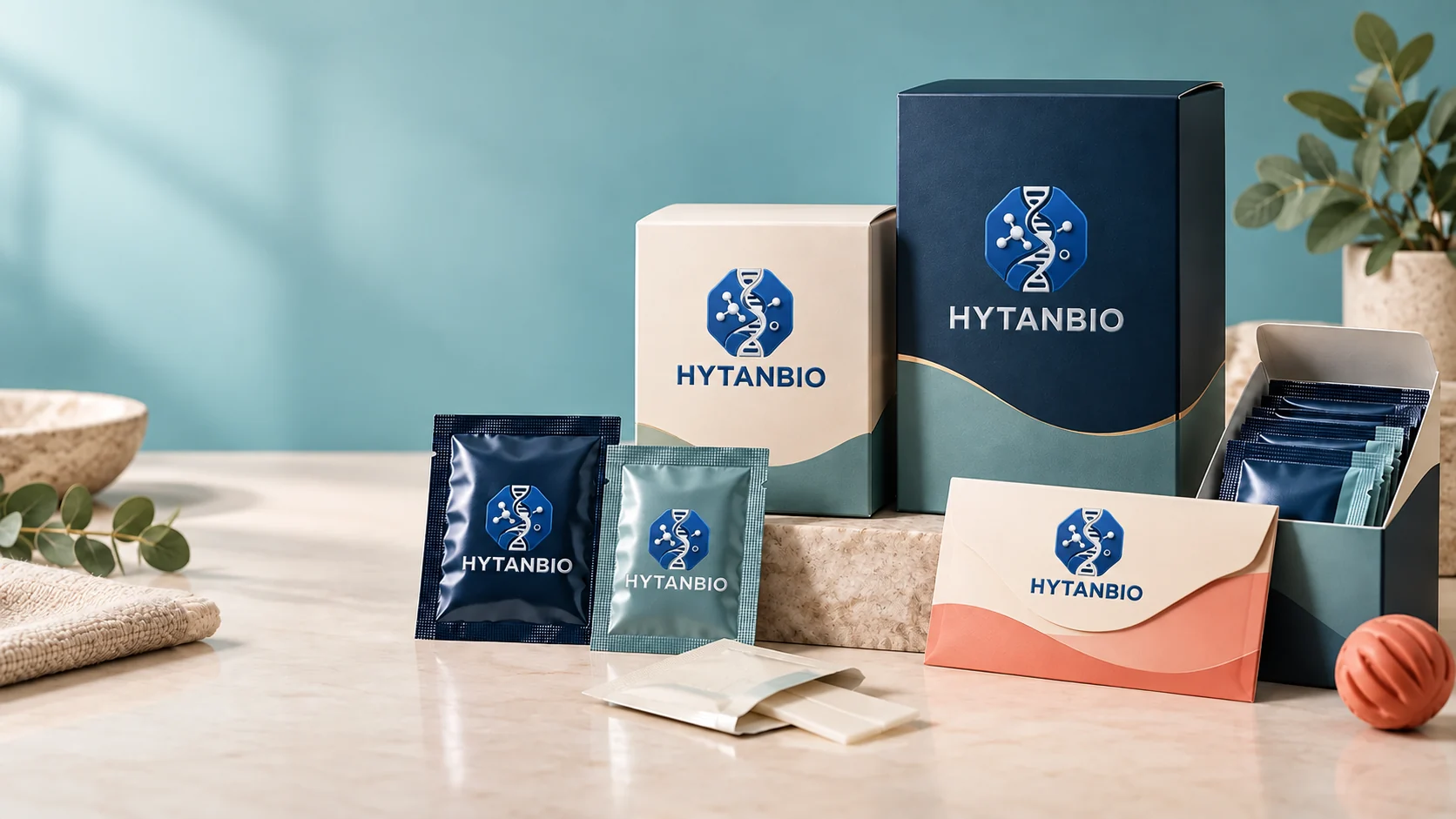
Start with the strip’s barrier needs
Oral films are thin and can be sensitive to moisture, handling and temperature. For that reason, the primary sachet is selected as a functional component rather than a decorative wrapper. The project team considers barrier performance, seal integrity, notch position, coding area, opening behavior and the relationship between sachet dimensions and film size. Individually wrapped strips are the standard starting point because they separate each unit from repeated exposure after a carton is opened. Material selection is confirmed with the intended shelf-life program and shipping environment. A premium appearance never substitutes for packaging validation, and broad sustainability language is avoided unless the structure, disposal route and market definition support it.
Configure 20- or 30-strip retail cartons
Standard commercial configurations use 20 or 30 individually wrapped films per box. The common film dimension is 2 × 2 cm; the current maximum is 2 × 3.5 cm, subject to formula and equipment feasibility. Cartons can contain loose sachets or grouped inner pouches when channel presentation, travel use or sampling requires another layer. The structural brief covers carton size, board, finish, insert, tamper evidence where applicable and shipping-carton efficiency. Pack count, net quantity and unit descriptors must remain consistent across the front panel, information panel and outer logistics labels. Buyers can bring an existing brand system or commission artwork coordination after the technical specification is stable.
Use packaging proofs to prevent expensive production errors
Every printed component should pass a controlled proof stage. The review checks dielines, bleed, minimum type size, barcode quiet zones, batch and date coding areas, ingredient order, mandatory statements, feeding or use directions and company details. Digital color is only an approximation; physical substrate and print method affect the finished appearance. Hytanbio can coordinate proofs, but the brand owner and importer must approve regulatory text for the destination market. Changes after print approval can trigger new plates, material waste and schedule impact, so the workflow intentionally locks formula, specification and label content before final artwork sign-off.
Plan sampling, launch and export pack-outs separately
Prototype samples, sales samples and commercial goods do not always use the same packaging route. Early feasibility samples may use neutral protective packs so the team can evaluate film performance without waiting for printed materials. Pilot or presentation samples can use short-run labels or sample envelopes. Commercial batches move to the fully approved sachet, carton and shipping configuration. Export cartons require an agreed count, dimensions, gross and net weights, marks and pallet approach. Separating these stages gives buyers a realistic launch plan and prevents a small sample requirement from determining an inefficient commercial structure.